Immersion and Collective Grief
Posted: January 13, 2026
The Opposite of Escapism
Virtual Reality and immersive technologies in general are often perceived as a portal to
escapism—a way to enter fantasy worlds and leave our own behind. It’s a type of technology
synonymous with distraction, a digital retreat from the complexities of modern life.
But what if this technology could do the opposite? What if, instead of helping us run from reality,
it could help us stand firmly within it, especially in the wake of unimaginable loss?
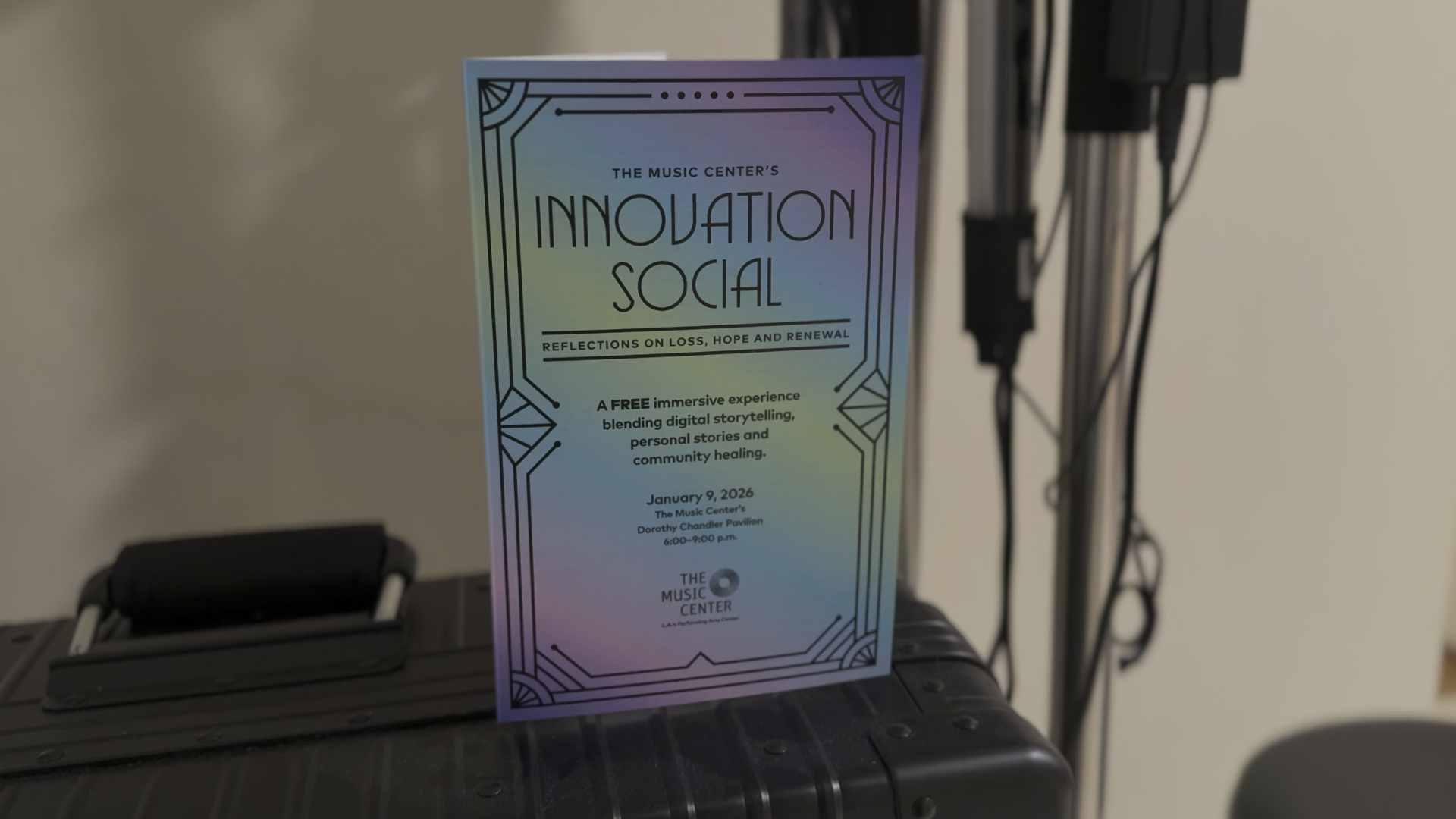
On January 9, 2026, one year after Los Angeles endured a devastating fire season, a groundbreaking
initiative did just that. Inside the Music Center’s Dorothy Chandler Pavilion, an event called
"Innovation Social: Reflections on Loss, Hope, and Renewal" showcased immersive experiences to
help a community heal. The event, which drew a crowd of over 500 attendees, was a resounding success.
The two experiences, Out of the Ashes, a VR documentary developed by Rory Mitchell of The Mercantile Agency and
Nonny de la Pena, PhD of Arizona
State University Narrative and Emerging Media,
and the interactive 3D display-based experience by Contrast Reality, used immersive technology not to
create an escape, but to build a bridge—to memory, to community, and to a new kind of collective
healing.
This article explores the most powerful takeaways from these projects, revealing how technology can
become
a profound tool for connection, memory, and renewal.
VR Became a Tool for Presence, Not Distraction
From the event, it became clear that the core mission of the Out of the Ashes VR documentary was
to create a sense of deep presence. To capture the "transitory" nature of the burn zones, the team
began filming and capturing just days after the flames ignited, placing viewers directly on the
ground in fire-ravaged areas. This stood in stark contrast to the detached, impersonal view of
traditional news footage, which often shows devastation from the safety of a helicopter.
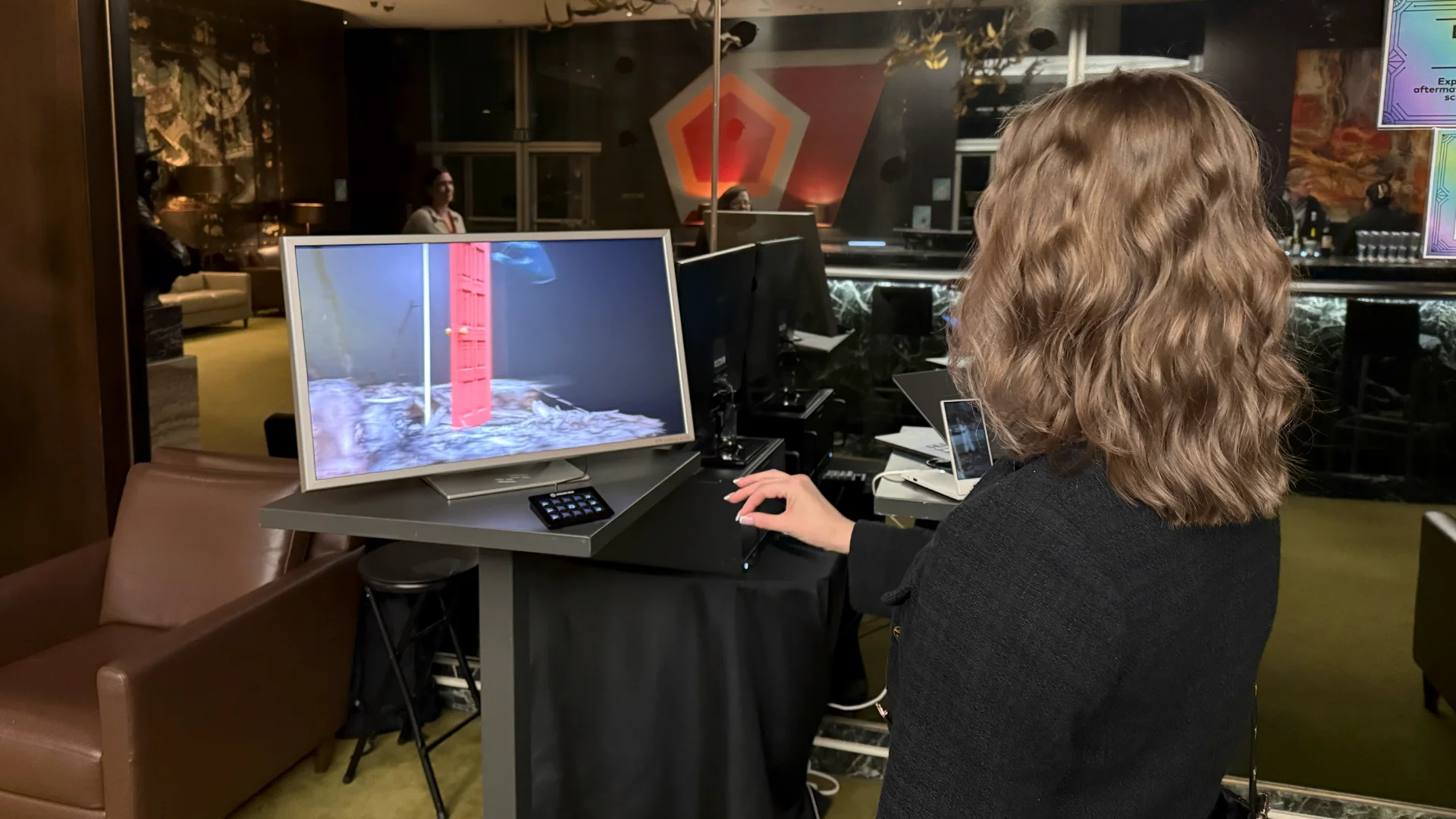
The experience was visceral. In one segment, viewers see a diorama of Altadena, their eyes zeroing
in on a single surviving red door. As they draw closer, the rubble dissolves, and they are transported
into the memory it holds—a cozy kitchen where a grandfather named Alexander celebrates a birthday. The
project’s director, virtual reality pioneer Nonny de la Peña, articulated the power of this shift from
observation to immersion.
I’ve seen a lot of helicopter footage, but when you’re right there in it, it’s a different perspective
as to what happened.
By replacing distance with presence, the documentary transformed an abstract tragedy into a tangible,
personal experience, creating a foundation for genuine empathy.
Technology Can Recreate the Ghosts of Memory
The project masterfully used old family photos to digitally reconstruct fragments of lost homes, placing viewers in what the creators call a "liminal space"—a powerful intersection of memory and current reality. This was not about rebuilding what was lost, but about honoring the echo it left behind. The 3D lightfield displays by Looking Glass provided a means for attendees to casually explore these reconstructions, allowing them to fly around and view the scenes from multiple angles using hand gestures. One of the most moving examples is the story of musician David Low. In the VR experience, he sits at his meticulously reconstructed kitchen table, recounting the rush to save his son and a few instruments as the fires approached. But surrounding this island of memory is a charred void where the rest of his home has vanished. The sense of presence is so strong that many viewers reported a natural instinct to "reach out a hand" in a gesture of support. As co-director Rory Mitchell explains, story is the only way to make such loss comprehensible, but it’s only through story that we can begin to wrap our hearts and brains around the scale of the emotional devastation and the psychic pain that the city has gone through. The accompanying interactive experience allowed attendees to see the finite details of the Cello, one of David's most treasured instruments, captured using Gaussian Splatting technology.
A Shared Digital Experience Can Build Real-World Community
If the Out of the Ashes VR experience was a digital sanctuary for private reflection,
then an interactive station engineered by Contrast Reality acted as a communal space.
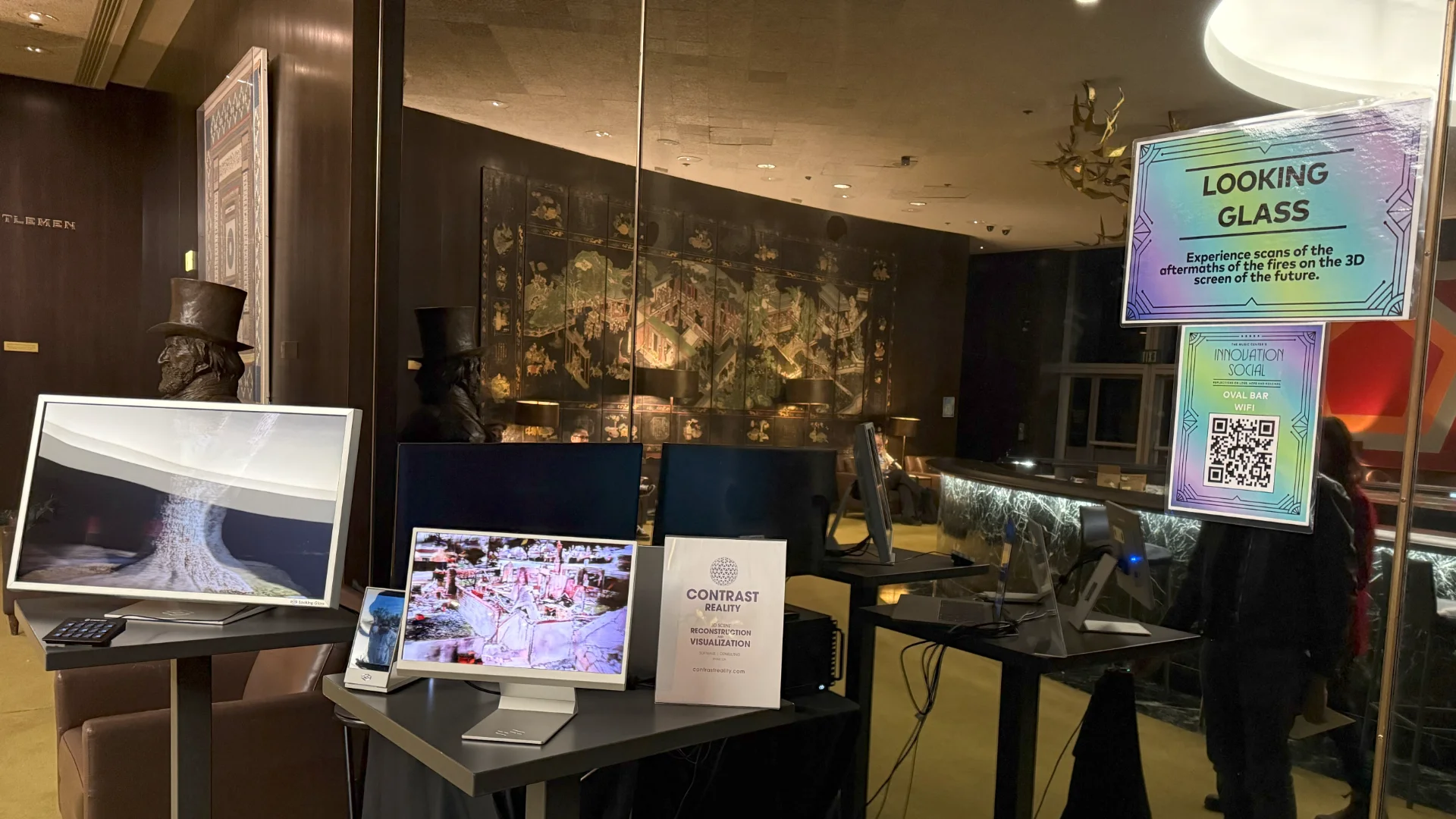
Here, the solitary journey of healing became a shared one. Contrast Reality partnered
with Looking Glass to showcase 3D content from the documentary on three specialized
displays of varying sizes—a 32-inch light field display, a 16-inch light field display,
and a Looking Glass Go—allowing groups to view and interact with the assets together.
Arvin Tehrani of Contrast Reality, the project's Principal Engineer, developed the
interactive experience. Using an UltraLeap hand tracker, guests could manipulate
the detailed 3D assets with simple hand gestures, rotating memories in their palms.
A Stream Deck allowed them to seamlessly switch between different assets from
the VR documentary.
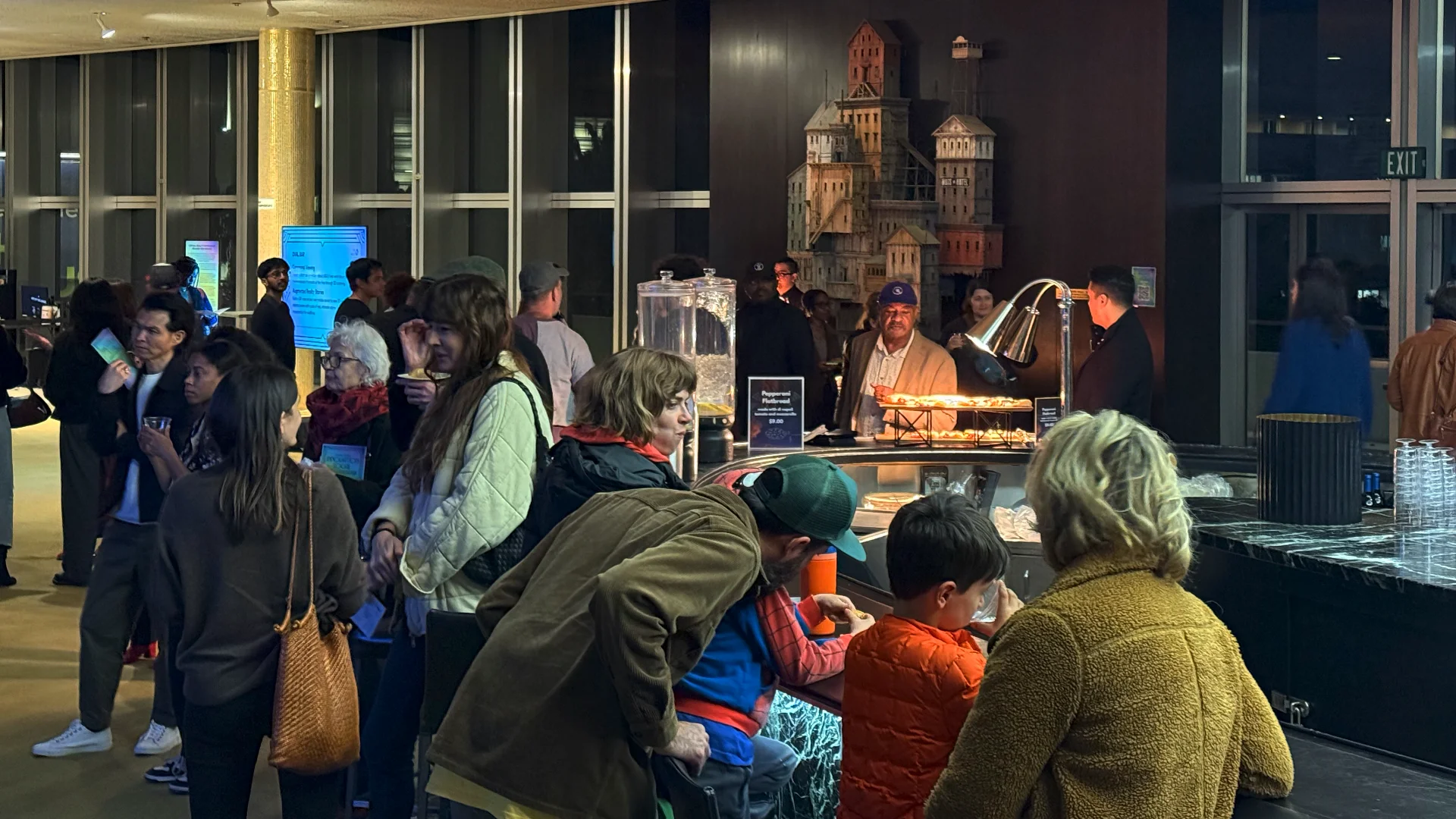
The station’s design masterfully blended technology with human psychology. Positioned near the
event’s buffet and bar, it naturally drew people in. Steffanie Tehrani, Co-Founder of Contrast Reality,
facilitated the experience, guiding groups of several people at a time. The space buzzed with reactions
of “WOW” and “oh so cool,” as visitors returned again and again, bringing friends to share in the
discovery. It was a powerful demonstration of how a shared digital interface can foster real-world
conversation and community. The technology became a catalyst for connection, turning individual moments
of reflection into a collective experience of healing together with the chants of "Altadena" ringing
in the background as attendees joined together in singing to honor the community's resilience.
In a Crisis, We Cling to Emotional Symbols
The project also used Augmented Reality (AR) to tell intimate stories of survival. Guests could
scan QR codes with their own devices to view 3D-scanned objects, each paired with a short,
personal narrative from a survivor. These weren't grand artifacts, but the small, everyday
items that became anchors in a moment of chaos.
With a simple scan, Melissa Rivers’ story unfolds as you examine a 3D model of her late mother
Joan’s Emmy. Another scan reveals a loaf of bread, and you hear the voice of Ted Porter remembering
how he bought his late wife's favorite as the winds began to pick up. Rivers’ reflection captured
the primal nature of these choices.
I don’t know why I grabbed what I grabbed. It’s just what I did.
These small, personal items became powerful symbols of what truly matters to us in moments of
chaos. They were tangible links to love, memory, and identity when everything else was turning
to ash.
Hope is Both Digital and Tangible
Out of the Ashes masterfully connected its digital stories of loss and resilience to the physical
world, ensuring its message of hope was not just seen, but felt.
A key segment featured landscape architect Esther Margulies, who discussed the resilience of
California live oaks. These native trees—what co-director Rory Mitchell calls "ember catchers"—survived
the flames that consumed other trees. The documentary captured the hopeful imagery of these oaks
standing grandly among the charred remains, symbols of endurance embedded in the landscape itself.
This digital narrative was given a tangible form at the event. The organization TreePeople gifted
acorns to all attendees, inviting them to plant a symbol of renewal in their own communities. It
was a simple yet profound gesture, ensuring the project's theme of hope extended beyond the screen
and into the real world, empowering everyone to participate in the act of rebuilding.
A New Reality for Empathy
For Contrast Reality, the Out of the Ashes project serves as a definitive stage for a larger
future mission: establishing immersive 3D technology as the standard for historical and
community preservation. By moving beyond the limitations of "flat" 2D media, Contrast Reality seeks to
ensure that stories of loss and renewal are not just documented or seen, but truly felt. This
project demonstrates that narrative-driven 3D content is a powerful tool for connection,
turning abstract tragedy into a visceral experience that fosters a level of emotional
connection traditional screens simply cannot replicate.
This vision was brought to life through the technical expertise of Arvin Tehrani, the project’s
Principal Engineer, and Steffanie Tehrani, the art director of the interactive experience. By showcasing
the documentary's volumetric captures across three Looking Glass Lightfield Displays, Contrast Reality
moved the experience out of the isolation of a headset and into a group-viewable space. Through the
integration of the UltraLeap hand tracker and a Stream Deck for interactive control, they provided
the community with a way to "touch" and manipulate digital memories, transforming these assets into a
social hub for shared reflection.
Ultimately, one of Contrast Reality's goals is to reach audiences in new ways that acknowledge healing
as a collective journey. By utilizing spatial technology to highlight the "emotional symbols" that
survivors cling to, we are forging a new frontier for empathy and journalism. As Contrast Reality
continues
to develop these immersive ways to experience valuable stories, they remain committed to building a
future
where technology helps us better understand our history and each other.